Independent guide · Florida
Powered Paragliding in Florida: An Independent Guide
An independent guide to paramotoring in Florida: federal and state rules, training, costs, airspace, weather, equipment and safety, explained for pilots.
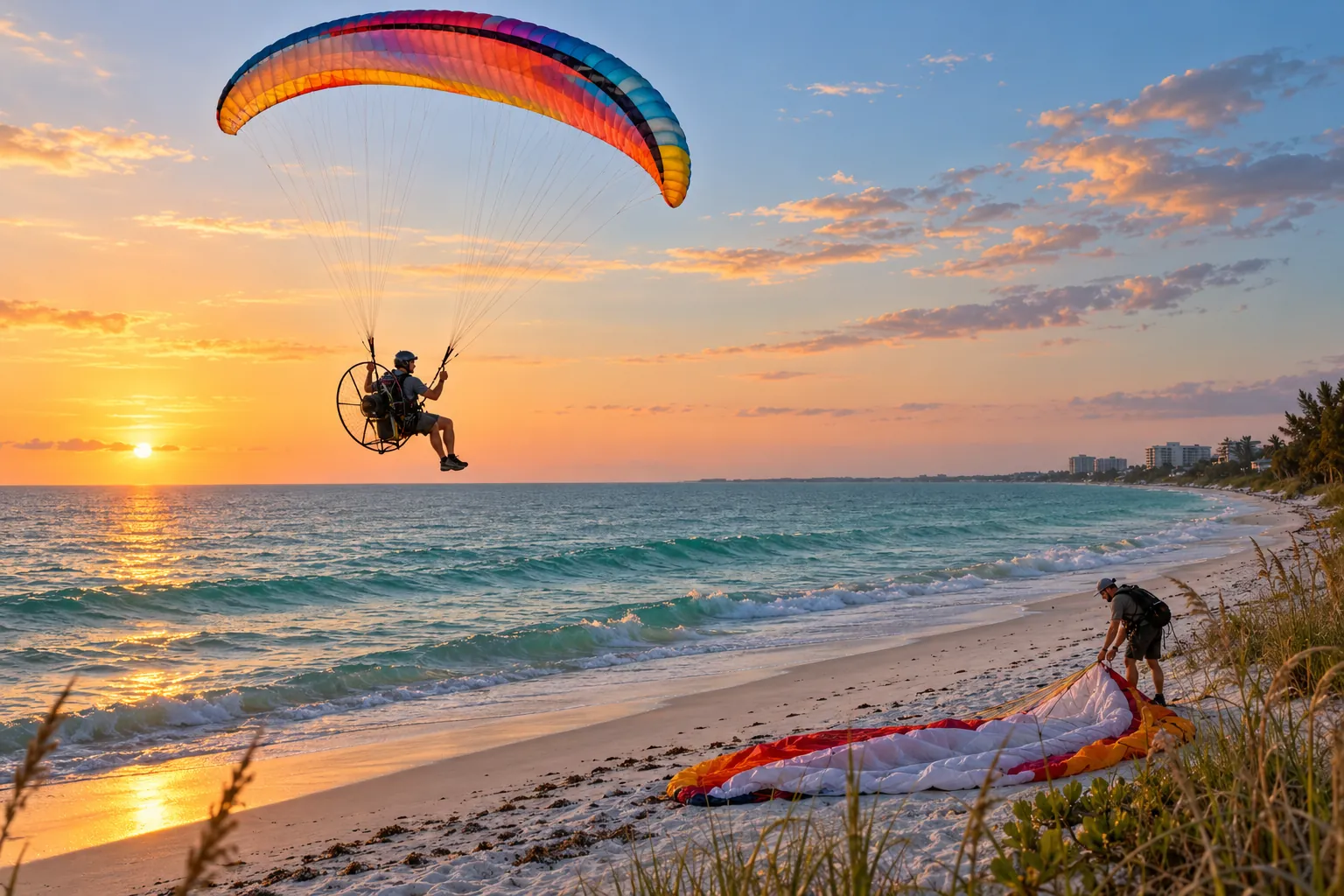
Powered paragliding, usually shortened to PPG and also called paramotoring, is about as simple as powered flight gets: the pilot wears a frame carrying a small engine and a propeller, inflates a paraglider wing overhead and takes off on foot. Florida helps the sport in some ways and works against it in others. The land is flat and open, the coastline is long and the early mornings are often glassy. The same state also has busy airspace, violent summer storms, strong sun and salt air that wears equipment out. This independent guide explains how all of that fits together for people who live here or plan to fly here.
Everything on the site is general information. We do not sell equipment, run lessons or take bookings, and nothing here replaces an instructor. The aim is to give new and prospective pilots a clear, honest picture before they spend money or take a risk.
Start with the rules and the basics
A single-seat paramotor that meets the federal ultralight limits needs no pilot certificate and no registration, which tends to surprise newcomers. The legal overview sets out what FAA Part 103 says and how state and local land rules limit where you can take off. The training guide covers how lessons work, what ratings mean and how to judge an instructor. The cost guide gives rough budgets for new and used equipment; prices move, so treat every figure as something to check with sellers.
Where, when and under what sky
The airspace around Miami, Orlando and Tampa, and around many smaller towered airports, is closed to ultralights without prior permission. The airspace guide explains how to read the chart and which restrictions to expect. Weather is the other half of the picture, and the weather guide covers sea breezes, summer thunderstorms, winter fronts and hurricane season. For the practical question of where you can actually take off, read the guide to launch sites and permission.
Understanding the equipment
The comparison of paramotors, trikes and powered parachutes shows how these machines differ and which rules apply to each. The pages on wings and engines explain certification classes, sizing, fuel and thrust, and the guide to safety gear and clothing covers the helmet, the reserve and the rest of what a pilot wears or carries.
Keeping equipment and pilots in good shape
Heat, humidity and salt are hard on gear, and the care guide suggests a routine for a hot coastal climate. The pre-flight checklist is a template for the checks to make before every launch, and the page on risks and emergencies describes what goes wrong and how pilots prepare for it.
How to use this guide
- If you are curious but not yet committed, begin with the legal overview and the training guide.
- If you are about to buy, read the cost guide, then the pages on wings and engines.
- If you already fly, the airspace, weather and care pages are likely to be the most useful.
- Check anything you plan to rely on against the original source. Rules, permits and prices change.
About the name
The site is named after its domain and has no connection to any manufacturer, dealer or business that has used a similar name. The about page explains this in more detail and lists where the information comes from. If you spot a mistake or an out-of-date rule, please send it in through the contact page.